Renovating an RV is one of the most rewarding projects for anyone who enjoys combining craftsmanship with adventure. Transforming a travel-worn vehicle into a personalized, comfortable, and functional home-on-wheels requires not just creativity and patience, but the right set of tools. Having spent countless hours working on my own RV renovations, I’ve realized that being properly equipped can make all the difference between a smooth project and a frustrating one. Whether you’re remodeling the interior, fixing structural issues, or upgrading systems, certain tools are simply indispensable.
Below is my comprehensive breakdown of essential tools every RV renovator needs, categorized by their purpose, from basic hand tools to specialized RV repair gear.
Basic Hand Tools for Every Project
Every renovation begins with the basics. These are the tools you’ll use daily, whether you’re tightening screws, prying panels, or cutting materials.
A reliable screwdriver set is one of the first investments worth making. You’ll need both flathead and Phillips-head screwdrivers in multiple sizes, preferably with magnetic tips to prevent losing screws in tight corners. I also recommend a ratcheting screwdriver for efficiency.
Next, a solid claw hammer is a must. It’s useful for removing nails, assembling frames, or making small adjustments where gentle taps or firm strikes are needed. Combine it with a rubber mallet for times when you need force without damaging delicate materials like vinyl, trim, or paneling.
A sturdy tape measure is essential for accuracy in every cut and fit. I’ve learned to keep one in my pocket throughout any project since measurements come up constantly, from cutting wood to ensuring furniture fits perfectly within narrow spaces.
Lastly, pliers in different forms, needle-nose, slip-joint, and locking pliers, make handling wires, clamps, and bolts far easier. They also come in handy for plumbing and electrical work, where precision and grip are crucial.
Power Tools That Save Time and Effort
Once the basics are covered, it’s time to bring in the power tools that make RV renovation faster and more efficient.
A cordless drill with a full set of bits is perhaps the single most versatile power tool for RV work. Whether you’re installing cabinetry, building bed frames, or drilling into metal brackets, it’s indispensable. I prefer one with multiple speed settings and long battery life since power outlets aren’t always nearby when working outdoors.
A jigsaw is another essential, perfect for cutting curved shapes in wood, plastic, or thin metal. It’s particularly useful when customizing countertops, wall panels, or vents. Pair it with fine-tooth blades for cleaner cuts and less splintering.
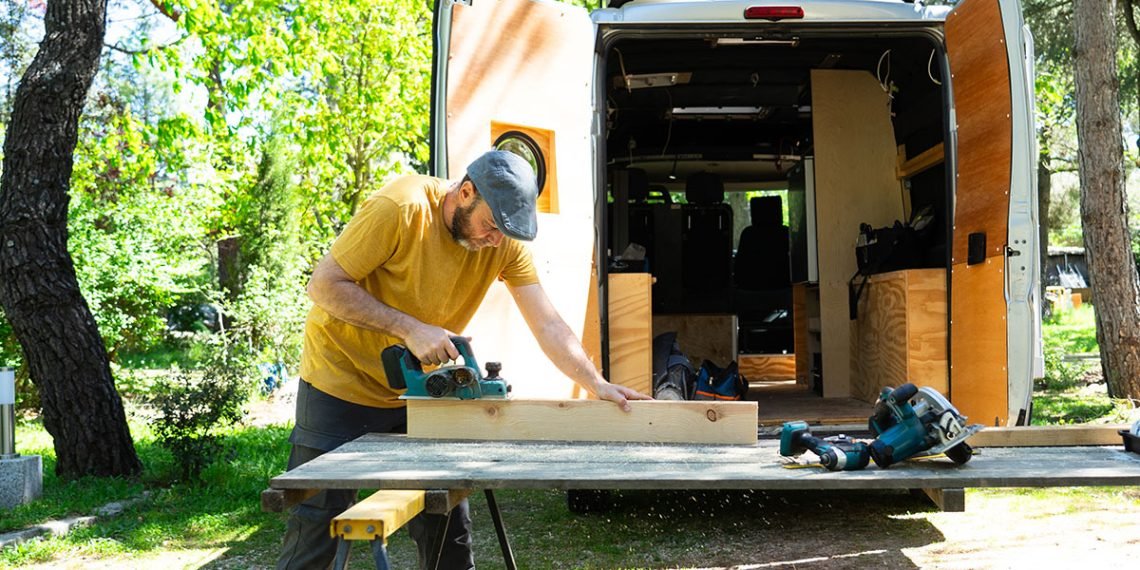
For larger jobs, a circular saw handles straight cuts quickly and cleanly. It’s excellent for cutting plywood sheets or framing lumber, especially when working on flooring or furniture structures inside the RV.
A multi-tool (oscillating tool) is the unsung hero of RV renovations. Its interchangeable attachments can sand, grind, cut, or scrape, making it ideal for tight spaces where larger tools can’t reach. I’ve used mine for removing old caulking, trimming laminate, and even smoothing rough edges.
Lastly, an electric sander is a must for refinishing surfaces. Whether you’re preparing cabinetry for a new coat of paint or restoring old wood, sanding properly makes a world of difference in how polished your final product looks.
Tools for Electrical and Plumbing Repairs
Electrical and plumbing systems are the lifeblood of an RV. They require precision and safety, which means you need the right tools to do the job correctly.
A voltage tester and multimeter are essential for any electrical project. They help ensure circuits are dead before you work on them, and they let you troubleshoot power issues like faulty outlets or inconsistent lighting. I’ve avoided countless shocks and mishaps simply by double-checking with these devices.
Wire strippers and crimpers are next on the list. They make connecting and securing electrical wires far easier, whether you’re installing new lighting or adding solar panels. Always use high-quality connectors and heat-shrink tubing for durability and safety.
For plumbing, a good pipe wrench and adjustable wrench are indispensable. They’ll help with tightening fittings, installing faucets, or replacing old pipes. A plumber’s tape (Teflon tape) should always be within reach, it prevents leaks at threaded connections and ensures a tight seal.
PVC cutters or a hacksaw also come in handy for working with water lines. In RVs, where space is limited and plumbing runs are often tight, these tools allow for precise, controlled cuts without causing unnecessary damage.
Safety Gear and Protective Equipment
Renovating an RV can get messy, noisy, and occasionally hazardous. I learned early that safety gear isn’t optional, it’s a must.
A pair of safety goggles will protect your eyes from flying dust, wood chips, and debris. Even a small particle can cause irritation or injury, especially when cutting or sanding materials in confined spaces.
Ear protection is equally important, particularly when using loud tools like saws and sanders. I prefer comfortable, reusable earplugs that block noise without making communication impossible.
Work gloves protect your hands from splinters, sharp edges, and burns. Choose a pair that offers both dexterity and grip, allowing you to handle tools and materials comfortably.
A high-quality dust mask or respirator keeps you safe when working with paints, adhesives, or old insulation. Ventilation in RVs can be limited, so wearing a mask can prevent inhaling harmful fumes and dust particles.
Lastly, always keep a first-aid kit close. Renovation projects can lead to minor cuts or scrapes, and it’s better to address them immediately before getting back to work.
Tools for Measuring, Marking, and Leveling
Accuracy is the secret to a professional-looking renovation. Even small miscalculations can result in uneven cabinets, slanted shelves, or gaps between panels.
A carpenter’s square and combination square help maintain perfect angles during cuts and installations. I rely on them heavily when framing walls or aligning furniture components.
A chalk line is great for marking long, straight lines on walls, floors, or ceilings before cutting or drilling. It helps maintain precision across large surfaces, especially when installing flooring or paneling.
A laser level takes accuracy a step further by projecting straight lines across an area. This tool is invaluable for aligning tile backsplashes, mounting shelves, or hanging artwork evenly.
Finally, a simple pencil and marking knife are underrated essentials. They ensure clean, visible marks that don’t smudge or fade during construction.
Adhesives, Sealants, and Application Tools
Every RV renovator quickly discovers that adhesives and sealants are as important as nails and screws. They hold everything together, literally.
High-quality construction adhesive is crucial for securing materials like wood, plastic, and metal, especially where screws can’t be used. A heavy-duty caulk gun makes application cleaner and more controlled.
Silicone sealant is a must for waterproofing joints around sinks, showers, and windows. It prevents leaks and mold growth while maintaining flexibility as the RV expands and contracts with temperature changes.
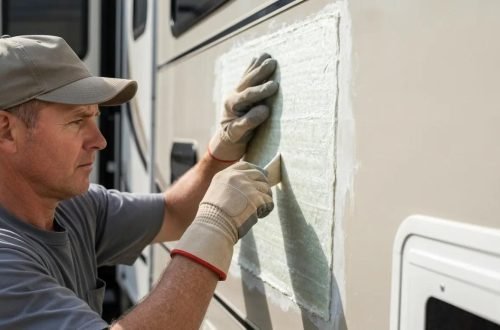
Epoxy resin can be used for structural repairs or bonding surfaces that require extra strength. I’ve used it to reinforce cabinetry and repair cracked fiberglass with lasting results.
Don’t overlook painter’s tape, it’s not just for painting. It helps create clean edges, hold materials temporarily, or mark areas for drilling. Combined with a putty knife, these simple tools ensure smooth finishes on every surface.
Specialty RV Tools Worth Investing In
Certain tools are designed specifically for RV maintenance and can save you time and frustration.
A rivet gun is incredibly useful for repairing aluminum siding or securing sheet metal panels. Many older RVs rely on rivets, and having this tool allows for seamless restorations.
A caulking removal tool makes stripping old sealant faster and neater, which is particularly helpful when resealing roof seams or window frames.
A voltage converter tester and surge protector are invaluable for ensuring electrical safety when connecting your RV to campground power sources. They prevent damage from faulty wiring or surges.
A water pressure regulator is another must-have when testing or reconnecting plumbing systems. It ensures water flows safely without putting excess pressure on your RV’s delicate pipes.
Lastly, a moisture meter can detect hidden leaks or damp spots behind walls and under flooring. It’s an early warning system that can save you from expensive repairs later.
Maintenance and Storage of Tools
After collecting these essential tools, maintaining them properly ensures they last for many renovation projects to come. I always clean my tools after each use and store them in a dry, organized toolbox. Cordless tools stay charged, blades are kept sharp, and moving parts get occasional lubrication.
Labeling containers and drawers also helps find the right tool quickly, which saves time during complex projects. When traveling, I pack tools securely to avoid rattling or damage on the road.
Final Thoughts
Renovating an RV is as much about preparation as it is about passion. With the right tools, even challenging tasks become manageable and enjoyable. Each wrench, drill, and saw becomes part of the adventure, helping transform a simple vehicle into a personal retreat that reflects your creativity and craftsmanship.
Every time I step back and admire a finished renovation, I’m reminded that the right tools didn’t just build the RV; they built the experience itself. Having these essentials at hand means you can take on any project with confidence, no matter how ambitious it may seem. In the end, every RV renovator knows that great tools don’t just fix and build, they inspire.